|


 |

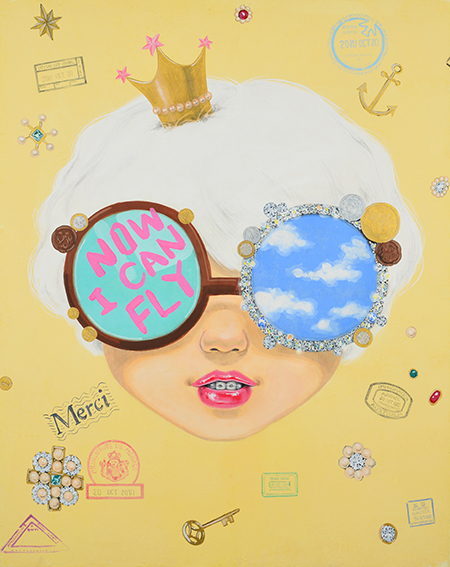 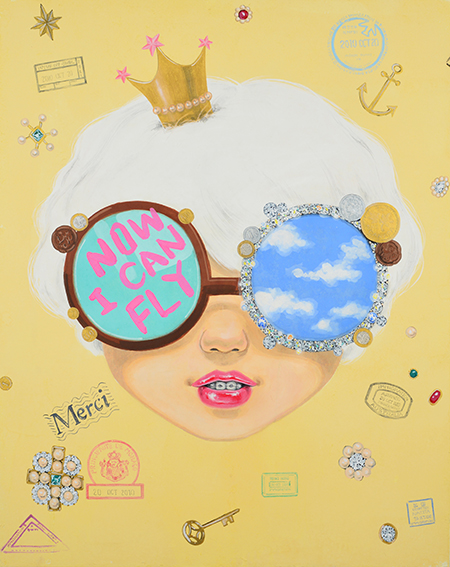 <Freedom is Not Free>는 욕망과 희망, 자유를 주제로 젊은 새터민들과 협업하여 진행한 프로젝트 작업 시리즈입니다.
1984년에 한국에서 태어나 자라난 작가에게 분단국이라는 정치적 이슈는 자연스러우면서도 떼어놓지 못하는 첨예한 지점에 있습니다. 분단 이후 태어난 많은 젊은 세대들에게 자유 민주주의는 익숙한 환경이지만, 반만년의 역사를 함께한 이북은 정치적으로 자유가 억압되고 폐쇄 된 공간입니다.
현재자유를찾아남한에자리잡은새터민들의수는3만을넘었습니다. 목숨을걸고탈북을시도한이들에게‘남한’이라는공간은희망과욕망, 판타지적상상이결합된공간입니다. 이들이목숨을걸고탈북을하며갖고싶어했던가치는어쩌면우리에게는익숙한일상의일부일도모릅니다. 정치적인자유가억압된곳에서자유를찾아온이들이욕망했던가치를5가지키워드로바라보면서, 이일상적이면서도전부가되는가치를통해우리곁에공기처럼존재하는‘자유’의무게를재고해보고자합니다,
ABOUT 주찬양
시골에서학교를다니고소를키우거나농사짓는일을돕다보면하루가다지나갔다. 아버지께서먼저탈북을하셨기때문에감시가심했다. 자유롭고싶었다. 계곡물에서수영을연습하며오랜시간탈북을준비했다. 주파수가잡히는한국라디오방송을들으며남한을상상했다. 또각또각구두굽소리와트렁크끄는소리, 그리고비행기가떠오르는굉음. ‘자유’란나에게‘여행’이었다. 가고싶은곳으로가는것.
주찬양님은 여행이 제한된 북한체제에서 늘 여행을 하고 싶다는 희망을 키웠습니다. 한국 라디오 드라마에서 흘러나오는 비행기소리, 공항 잡음을 들으며 남한을 상상했습니다. 주찬양님의 남한을 향한 욕망은 ‘여행’이었고, 여행에 그녀의 대한 욕망을 모티브로 작품을 제작하였습니다. 주찬양님이 작품 안경에 쓴 문구는 "Now
I can fly"입니다.
=============================================
<<Freedom is Not Free> is a series of project work in collaboration with young North Korean defectors on the subject of desire, hope, and freedom.
The political issue of a divided country is at a point where it is natural and cannot be separated from the artist who was born in Korea in 1984 and raised in the same country. For many young people born after the division, liberal democracy might be a familiar environment, but the North, where we have shared a history of more than half a century, is a space where political freedom is suppressed and closed.
There are now more than 30 thousand North Korean defectors who have found freedom in South Korea. For those who have tried to escape with their lives at risk, ‘South Korea’ is a space that combines hope, desire, and fantastical imagination. The value they wanted to attain even if it meant risking their lives is just a part of our everyday lives. As I look at the desired values of those who sought freedom from a place where political freedom is suppressed in 5 kinds of keywords,I try to reconsider the weight of ‘freedom’ that exists like air for us—ordinary but all-inclusive.
ABOUT Joo Chan-yang
I attended school in the countryside, and the
day ends once I was done helping with cattle-raising and farming. The
surveillance was tight as my father had escaped first. I wanted to be free. I
practiced swimming in the valley and prepared to escape for a long time. I
imagined South Korea while listening to the Korean radio station that got frequency.
The tap-tap sounds of shoes, the sound of a trunk closing, and the roar of an
airplane. To me, ‘freedom’ is ‘travel.’ To go where I want to go.
I crossed the Tumen River during the rainy
season and went to China, but I was dragged to the prison upon being reported.
When repatriated to the North, it meant that my remaining life was either to
die or to work. In my most desperate moment, I was able to miraculously go to
South Korea. With the help of some people who made a united effort to provide
money for me, I was able to step foot in South Korea, which was like a
futuristic world for me. ‘Why did these people spend so much money to save a
person like me?’ Perhaps it was hard for me to understand, despite feeling
grateful, because I lived for so long in a place where freedom is suppressed,
where I could not think of helping others. That is why I wanted to help
someone, too.
In the afternoon, I usually drink tea at a café.
Whenever I would reach the point of getting used to living in South Korea, I
would think back to my days in North Korea, and realize that this moment of
having a cup of tea is such a great miracle in my life.
Joo Chan-yang grew her desires to travel all the
time in North Korea, where travel is limited due to its system. She imagined
South Korea by listening to the airplane noises and airport noises from Korean
radio dramas. Joo Chan-yang’s desire towards South Korea was ‘travel’ and she
created a work with her desire to travel as the motif. The phrase written by
Joo Chan-yang in the glasses of the work is “Now I can fly.”    |


 |